
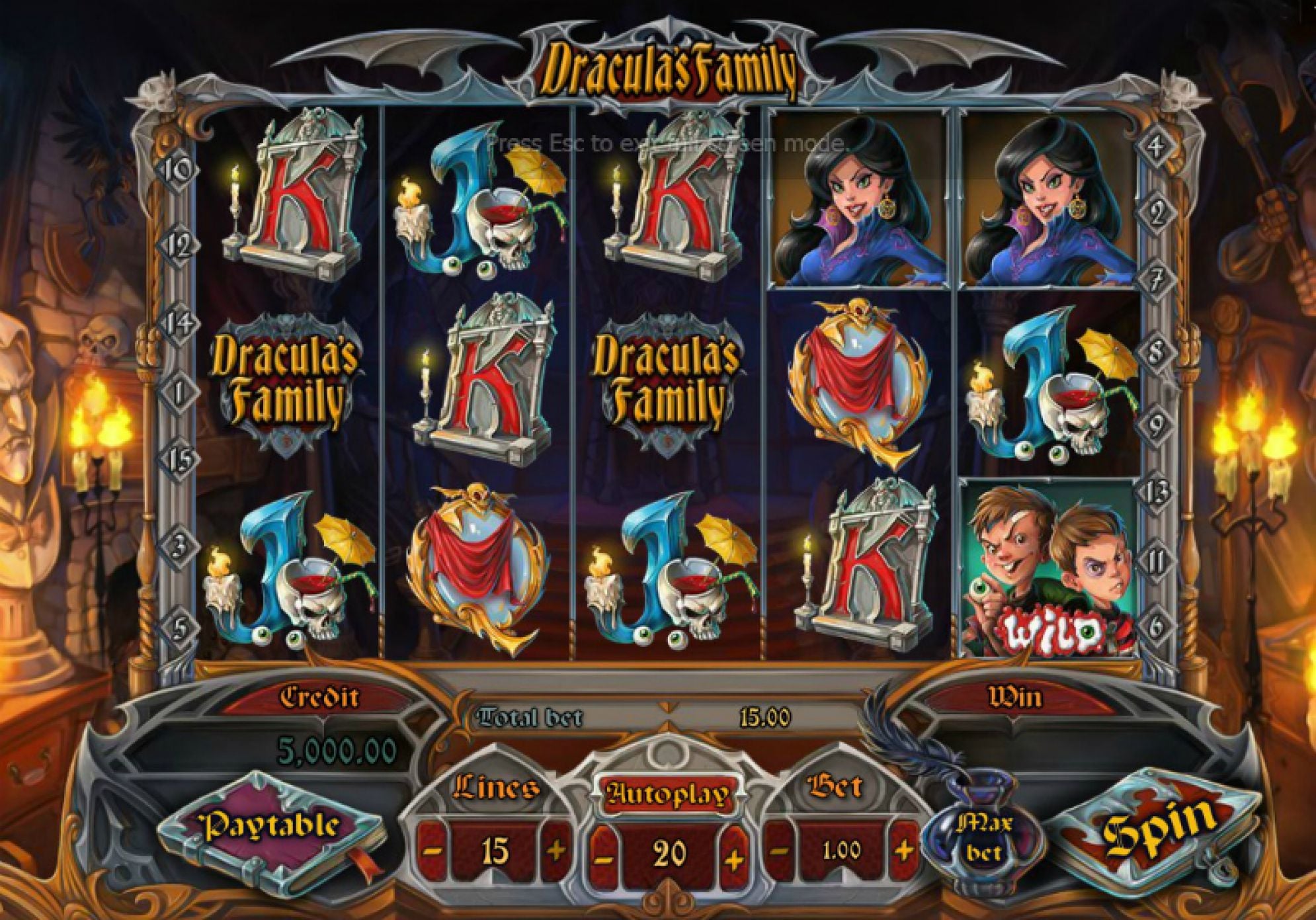

Dracula Casino affiliate partnership operates under a stringent regulatory structure built to meet—and exceed—what Canadian players look for. Every game on the platform leans on independently certified Random Number Generator technology. Without a approved RNG, a digital casino cannot guarantee that its slot results, card draws, or roulette spins are really random and just. This article goes through the technical certification process, the auditing bodies involved, and how those protocols tie into the wider legal and affiliate picture you’ll find on the brand’s legal hub. Understanding these mechanics provides players and business partners real confidence that Dracula Casino delivers a open, protected, and mathematically sound gaming environment in every Canadian province where the platform is available.
The Role of RNG in Online Casino Fairness
A physical casino depends on physical dice, cards, and mechanical wheels to ensure fairness. Online, those tangible processes get replaced by Random Number Generators—sophisticated mathematical algorithms. An RNG is a software system that spits out a sequence of numbers or symbols with no foreseeable pattern. In casino games, that means each spin of a slot reel or virtual card deal is its own separate event, completely unrelated to whatever happened before. Without a well-functioning RNG, games could be tampered with to lower RTP percentages or create unnatural losing streaks. Dracula Casino uses a blend of hardware-based random generation and advanced pseudo-random algorithms to mimic true randomness. That layered approach makes sure no external factor—server load, player history, anything—can sway the result of a game round.
Security Protocols Protecting the RNG Environment
A certified RNG is worthless when the surrounding server environment is vulnerable to breaches. Dracula Casino uses a multi-layered security setup to safeguard the random number generation process. The RNG server sits in a segregated, fortified network zone, isolated from the web servers that handle player traffic. Intrusion detection systems monitor for any unusual efforts to intercept the entropy sources. Additionally, the casino uses Transport Layer Security encryption to stop man-in-the-middle attacks that could potentially manipulate game result data en route to the player’s device. Regular penetration testing performed by outside cybersecurity firms reinforces the RNG audits. This whole security posture ensures the certified randomness created on the server arrives at the Canadian player’s screen exactly as intended, free from interference by bad actors.
The Reason RNG Certification Counts for Canadian Affiliates
Affiliate partners who market Dracula Casino across Canada lean hard on the brand’s reputation for integrity. Their community trusts their recommendations, and driving visitors to a platform without certified fair gaming can destroy that trust for good. RNG certification is a powerful marketing asset for affiliates. It’s verifiable proof that the casino does not manipulate game outcomes—a issue that skeptical players often mention. Dracula Casino’s legal and affiliates page offers partners compliance docs and brand assets that showcase these technical certifications. When affiliates stress that the games are independently tested, they can boost conversion rates and hold onto players. Being transparent about RNG fairness also reduces complaints and chargebacks, which renders the en.wikipedia.org whole partnership more stable and lucrative.
Autonomous Auditing Bodies and Testing Laboratories
Dracula Casino does not depend on internal checks to certify its RNG systems. The platform collaborates with internationally recognized testing labs that focus on iGaming software certification. These labs function apart from the casino’s management and marketing teams. Their entire job is to mathematically stress-test the random number outputs over millions of simulated game rounds. Labs like iTech Labs, Gaming Laboratories International, and eCOGRA are the ones reputable operators usually engage for these evaluations. The auditors run rigorous statistical analysis—chi-squared tests, diehard tests—to identify any bias or repetition. Once the software satisfies those exams, the lab issues a formal certificate of compliance. Dracula Casino displays these certifications openly. Canadian players can verify the certificate’s validity directly on the testing lab’s official website.
- iTech Labs – an internationally accredited lab focused on RNG and RTP compliance for online gaming platforms.
- Gaming Laboratories International (GLI) – handles testing and certification for both land-based and iGaming systems, with a strong influence in regulated markets.
- eCOGRA – a London-based testing agency and player protection body that guarantees fair gaming, responsible operator conduct, and timely payouts.
Regulatory Compliance and Canadian Legal Requirements
Canada’s online gambling regulations vary from province to province, but the technical bar for game fairness stays high across the board. Dracula Casino aligns its RNG certification protocols to the guidelines set by the reputable international jurisdictions that regulate it. Those regulatory bodies require RNG certifications to be updated periodically—not just issued once. Ongoing compliance checks guarantee that software updates or server moves don’t affect game randomness. The legal and affiliates page at Dracula Casino spells out the operator’s commitment to anti-fraud and player protection norms. Possessing a license from a reputable offshore regulator that adheres to Canadian consumer protection principles allows the casino close the gap between local expectations and global operating standards. So players in Ontario, British Columbia, and other provinces get a platform that respects the spirit of Canadian gaming law.
Continuous Monitoring and Re-certification Cycles
RNG certification is not a single occurrence. The digital landscape shifts, and software updates are needed to patch vulnerabilities or roll out new game features. Dracula Casino observes a mandatory recertification cycle set by its licensing terms. Any big game engine update means the changed components get resubmitted to the testing lab for a delta audit. Even without major updates, the platform goes through annual surveillance audits where auditors pull live server logs and compare actual game outcomes against the expected statistical spread. This ongoing oversight catches any drift in randomness that could come from hardware degradation or memory leaks. For Canadian players, this commitment to continuous monitoring means the fairness of the games today is just as solid as it was the day the first certificate was issued.
The Accreditation Procedure Step by Step
Obtaining an RNG certificate is hardly a rubber-stamp formality. It’s a tough technical audit that can take weeks. The casino first provides the full source code of its RNG engine and game client software to the testing lab. The lab decompiles and inspects the code to spot any hidden functions that could override the random output. After the code review, the lab performs billions of simulated game rounds to generate a huge dataset of outcomes. That data undergoes statistical analysis to verify uniform distribution, unpredictability, and non-repeatability. Analysts also verify that the RNG cannot be seeded by player input or external timestamps in a way that produces an edge. Only after the software clears every math and security checkpoint does the lab provide a digital signature and a public-facing certificate of integrity for Dracula Casino.
Code Integrity and Hash Verification
Before the number crunching begins, auditors perform a critical security check called hash verification. A cryptographic hash functions as a unique digital fingerprint of the game file. Change a single line of code after certification, and the hash value flips completely. Auditors store the original hash, and Dracula Casino’s compliance team routinely confirms that the live server files still match that certified fingerprint. This prevents a bait-and-switch where a certified game gets swapped for a manipulated version after the audit. Tech-savvy Canadian players can also independently check game fairness through provably fair mechanisms on select titles, adding another layer of transparency to the hash verification system.
Return to Player Statistical Validation
Beyond pure randomness, the certification also checks the math model behind every game. Return to Player (RTP) is a theoretical figure—the percentage of total wagers a game will pay back over an infinite timeline. Auditors simulate the game logic using the certified RNG output to confirm that actual results match the theoretical RTP. This step makes sure the house edge is exactly what’s advertised and no hidden variables reduce a player’s bankroll faster than the stated math indicates. For Dracula Casino’s big library of slots and table games, this means Canadian players receive products validated for payout accuracy, not just randomness.
In what manner Dracula Casino Applies Certified RNG Technology
The underlying structure of Dracula Casino’s RNG sits on a cryptographically secure foundation. Unlike the basic random functions you would encounter in a standard programming library, the casino’s algorithm draws entropy from unpredictable physical noise on the server hardware. That seed value gets refreshed constantly to shut down any chance of pattern prediction. The RNG output then gets mapped to game-specific outcomes—like the stopping position of a virtual reel or the rank of a dealt card. The mapping process gets audited too, to ensure that the statistical spread of results lines up with the theoretical game math. For Canadian players, this signifies a slot with an advertised 96% return-to-player rate will, over a big enough sample size, perform exactly as advertised. The system is separated from player account logic, so deposit amounts or loyalty tier status carry zero influence on game results.
Cryptography-Based Security vs. Basic Random Functions
The random functions in a casual mobile app and the RNG inside Dracula Casino stand as worlds apart. Standard pseudo-random generators usually grab the system clock as a seed and run a simple formula. That’s acceptable for shuffling a music playlist, but these basic generators are predictable and completely unsuitable for gambling. A certified casino-grade RNG must be cryptographically secure—impossible to predict future outputs even if you know the algorithm and all past outputs. Dracula Casino’s RNG achieves this by seeding with true entropy, collected from unpredictable hardware noise. The output then undergoes a cryptographically secure hash function to eliminate any remaining bias. That distinction constitutes a big reason the platform can legally provide real-money games, and it’s a key checkpoint during lab audits.
Clarity and User Entry to Certification Data
Dracula Casino doesn’t treat RNG certification as a concealed legal footnote. The platform places live certification seals straight in the game lobby. Click one, and Canadian players view the digital certificate, the last audit date, and the testing lab’s name. That immediate access implies you don’t have to take marketing copy at face value. The legal and affiliates hub also archives past certification reports for anyone conducting due diligence. For affiliates, this transparency is gold. It allows them build pre-sale landing pages that link straight to verifiable proof of fairness, addressing the top objection potential depositors have: the fear of rigged games. By rendering the technical details of RNG validation public, Dracula Casino builds a trust relationship that serves players, the operator, and the affiliate network evenly across the Canadian gaming landscape.